|
|
ECOPOD HOMES
How Ecopod Homes delivers eco
|
|
|
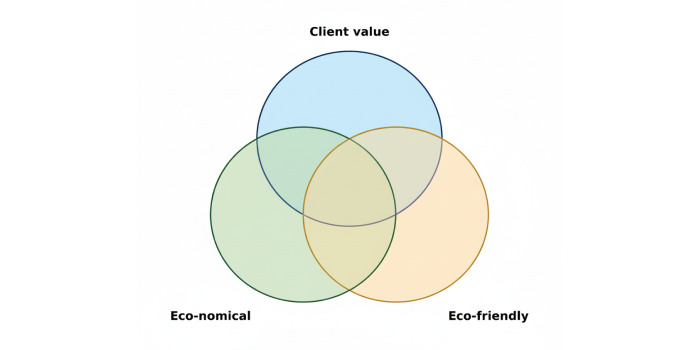
We don't aim to build the cheapest homes. Our goal is to build quality homes that get clients what they want for the most economical, or affordable, price we can offer, constructed using eco-friendly materials and methods.
|
|
|
Our Approach
When we decide which materials or methods to use, we look at the options using three criteria: quality, affordability, and environmental impact. We select the best options for our standard designs, inclusions, and upgrade options.
The best materials and methods deliver on all three, but they can be hard to find. Two out of three is good, as long as it does not erode the third. One is good too, if it can be achieved without eroding the other two. Material options are identified through our own investigations, approaches from suppliers, and solutions proposed by clients researching options for their homes.
|
|
Continuous Improvement
Kaizen is an important foundation for our building methods. Developed by Toyota to drive continuous, everyday improvement, kaizen is about eliminating waste, boosting quality, and increasing efficiency across work processes.
We apply kaizen principles by involving builders in the continuous improvement of our building methods, with the aim of minimising waste and rework, ensuring safety, and delivering consistent high quality. Kaizen also supports the ongoing cost reductions that allow us to offer competitive prices.
|
|
|
Timber Preference
We prefer to build with timber. Timber construction takes carbon from the atmosphere and stores it in the house. Trees can be regrown on the land, while concrete and steel come from the extraction of iron, coal, and limestone followed by high-temperature processing.
Many people also find that timber provides a more cosy, warmer feel than other materials, and it can help reduce condensation. We also prefer to source materials locally to reduce transport emissions.
Compostable toilets, off-grid energy, water storage tanks, and other options for remote locations or for people who want independence from services are sourced when required. These technologies and products change rapidly, and people have widely varying needs, so we do not include them among our standard options.
|
|
|
Practical Examples
Some examples of the ways Ecopod Homes delivers the environmental "eco" are:
|
|
|
Weathertex
A natural product with an exceptionally long shelf life, safe to work with, Weathertex is made from reconstituted hardwood that would not be used for much else. It contains zero chemicals, relying instead on natural wax, which preserves it better than harsh chemical treatments.
|
|
|
uPVC joinery
By replacing aluminium with recycled uPVC, we have made joinery more affordable and higher-performing. It offers twice the insulation of aluminium, eliminates condensation, provides better noise reduction, and is crafted from offcuts sourced from uPVC factories and joinery removed from old houses in Europe.
|
|
|
Multi-functional materials
By selecting products that serve multiple purposes, we reduce inventory and waste. Instead of stocking multiple specialised glues and sealants, we work with suppliers to identify a single, versatile product that meets all our needs. These small, smart choices add up to significant environmental benefits.
|
|
|
Timber optimisation
At the design stage, we carefully plan building dimensions to reduce unusable offcuts for wall panels, roof rafters, and floor joists. We also use templated cutting lists to ensure offcuts from higher-treatment timber bearers are repurposed for other applications within the build. This reduces cutting, dust, labour, and waste.
|
|
|
Waste management
We partner with a waste management provider that sorts construction debris to recycle timber and other reusable materials, diverting them from landfill.
|
|
|
Our Values
Ecopod Homes' eco principles were established by Paul Dyson, who led the business from 2019 until 2025. Paul unexpectedly passed away last year, and his absence is deeply felt at Ecopod Homes, but his influence still guides the business today.
For every home we build, we plant ten trees in Paul Dyson's regeneration conservation valley. Through community working bees involving Ecopod Homes staff, friends, family, spouses, and even children, we have transformed the area. Now, we watch as water runs down the valley, naturally purified before flowing into the Hauraki Gulf. Involving our team and their loved ones in these hands-on efforts sets the right framework for tackling daily decisions in Ecopod Homes operations.
|
|
|
Leadership
Rick Boven is the current Managing Director, and he continues to deliver on the values Paul established. Rick's experience has prepared him well to manage Ecopod Homes' evolution as a company providing quality, eco-friendly homes and other buildings at a competitive price.
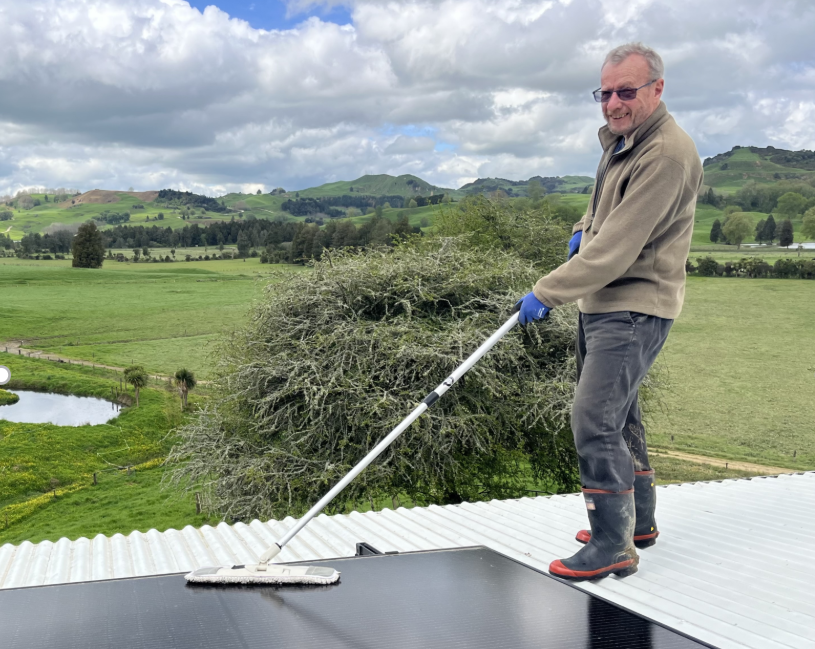
That experience includes a PhD in environmental management, and he has led many projects for leading corporations, government organisations, and NGOs in New Zealand, developing strategies to improve economic and environmental outcomes. Project topics have included water quality, renewable energy, environmental monitoring, building materials, sustainable house design, smart homes, transport, and urban design.
His passion for the environment has also motivated him to advocate for climate and environmental protection and restoration, and to advise many of New Zealand's environmental advocacy organisations. He and his wife Danielle are developing a small regenerating farm focused on kaitiakitanga, resilience, sustainability, and productivity.
|
|
|
When clients choose Ecopod Homes, they are choosing more than a well-built home. They are choosing a team that cares about quality, works hard to deliver value, and puts real thought into the impact of every build.
|
|
|
|
|
|
|